So, on Sunday, in the worship, I got some quickening on a stream of thoughts, about creation and the cross.
It’s too long, so I’ll add a meme or two to tee up the thinking.
In certain sense, the story of the bible goes like:
* Creation.
* Cross.
* New Creation
Others would say, with more detail:
* Creation
* Fall
* Israel
* Jesus – Cross and Resurrection
* Church
* New Creation
There are things to learn from both views. The longer one shows more facets of Jesus
(we see the Great Prophet Moses spoke of, the true kingly son of David, the true Lamb that fulfills all sacrifice, and the great High priest. And we start to see the personification of Yahwew. ) And when God is a character in a story, He is in it, and beyond, authoring it.
But the simpler, 3 fold, version, Creation.Cross. New Creation does something equally useful. In pruning out the history of Israel it emphasises something very powerful about the beginning and the end.
Creation to the Cross is the first half of the bible. Resurrection to the New Creation, is the second.
We see Jesus as the second Adam – redeeming the whole creation – fulfilling purposes originally conceived in the Garden. There is a symmetry to this approach – we first see the tree of life at the very start, in Genesis 2, and the very end Revelation 21 – John knows he is writing a bookend to Genesis, the new heaven and a new earth.
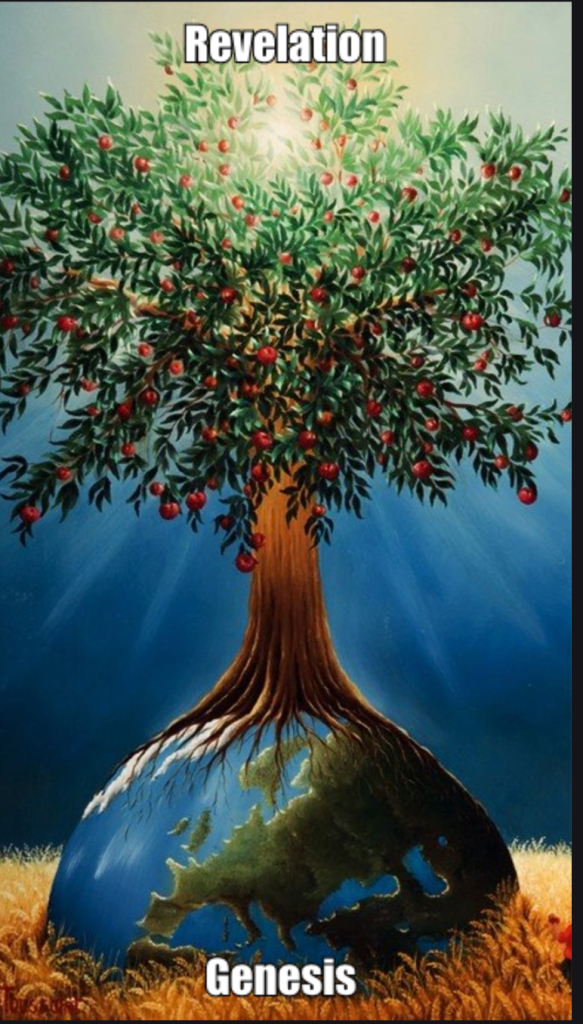
Christianity does not start with the Cross – except in the mystical sense of the Lamb being slain before the foundation of the world. But the cross is not the first element in our story. It is wrapped in the middle of two creation narratives.
One could open the bible to show that, andI will approach the Gospel of John, but first, let’s approach it via another path.
Take, if you will, Narnia, with its Christ figure, Aslan, who spans creation and redemption.
Don’t be put off by the childlike side of this – CS Lewis was drawing on deeper insights.
If we theologise the Narnia story a little, no doubt there is some sense in imagining Aslan always foresaw the need to die for Narnia, knew from the beginning that the error that let evil in, would fall on him. You see him knowing that, in fact, as he confronts the first child about how a witch has been allowed in the new world. And it is implied that some aspect of the story is prewritten in the letters of creation, the Emperor’s “Deepest Magic” which touches on the mystery of sacrifice.
But in getting to that difficult part,– we must still come through the story, through the adventures, the gradual exploration of the land, its noble people and creatures first.
So Narnia is loved for its creation, its song and nobility, its wonder and characters, before its difficult parables of sacrifice are fleshed out. Evil is an interloper, a thing that might not have been. And we are caught up in the story, almost without it. We resonate as Aslan sings it all into being. Or later, see the delight of Lucy, recapturing the trust and boldness of an innocent child.
There are early hints that Aslan will deal with the witch who has bound the land in endless winter, will cause a new spring to come forth, will bring the frozen wastes into new bloom. And will also rescue the traitorous brother who is more deeply bound than he knew, or meant to become.
But it is also a creation-wide redemption, and we hear of that first – the promise of the endless winter breaking. The new jovial Christmas figure.
The account of redemption is key. But if the story, or cinema version, was to cut too quickly to the sacrifice, it would risk making that world no more than a setting for the stone table, and we would lose something of the scope, of what it achieves. We need to see the weight of the created order, to really value the weight of that redemption. The goodness of the world is more than the terrible path Aslan walks, though it is reduced to that brutal logic, for one day. The reward is more than Edmund returned to sanity, and to his family; it also the freedom of the whole land, and the reversal of the stony deadness of all the prisoners. It is the proper rule over the whole land, kings reigning properly, and the whole world now rejoicing in spring. We undermine the meaning, cut short the proper telling, if we do not see that that whole frame.
That willingness to sacrifice might underpin all that is good and noble, all that is true, in Narnia and indeed our world.
But it is wrapped in a double creation.

So to query Narnia for meaning again – and it is better just to read it as a story rather than mine it for these snippets – consider its end story; The Last Battle. As the whole world ends, falls to wrack and ruin at the end of days, the world ends, yet the chronicle does not end. After the world is wrapped up, through the darkness, through a dark door, comes a world rekindled. A new Narnia, or something very like it, but greater, is given. It as if all is resurrected within the goodness of a deeper frame. All the loved ones again known in one new timeline; all journey deeper in, a journey to the heart of goodness that has always been there.
Sacrifice is not just at the stone table. It is hidden in the nobility of being willing to serve and stand for what is right. It may be embedded in the path of honour – not the pride of saving face, but of protecting the good, of treating even the (human) enemy fairly,. Sacrifice comes by growing in true discipline, being on the right path, doing the right thing, discarding the false, fighting for what is right, and serving what is good. And the rolling currents of joy and goodness follow.
All of that, draws from the heart of self-surrender – and the deeper price which restores honour where it has been lost.
So, from the parable to the bible.
Our own divine prehistory knows a garden, a paradise, Eden, before it knows a fall.
We come via the creation days of a seven fold blessing, the repeated statement that creation is Good and very Good, and that rest remained on all.
So we see the themes of work and discovery in the garden, tasks of naming and tending. We see the gift of God’s presence waxing and waning, His presence intensifying in the cool of the evening. The garden sketches a vision of growth, of stewardship, of exploration.
And we must hear and ponder that creation-wide blessing and potential.
All of that, before the fall, before the fatal conversation with the serpent, before the prophecy of the heel being struck as the enemy’s head is crushed.
We may have served the witch, or the serpent, in one way or another. We may have become stricken, helpless as that heavy price of redemption fell on Another, in freeing us.
But nonetheless, let us also honour the wonder and promise of the new creation which is always intended. All things are made through Him, and for Him, things on heaven and on earth. All structures, all thrones, all dominions.
So, hear the gospel of John. John knows he is writing scripture – he starts his gospel by quoting Genesis. “In the beginning”. –
Just starting with that, we know this is not just a salvation of souls story, It a new creation story.
Thus, he starts, as I do here, by skipping over Israel, and orients us the original creation narrative, the days which set up realms and rulers. All that comes back in view. The word, he says, is behind all that is made:
In the beginning was the Word, and the Word was with God, and the Word was God. He was with God in the beginning. Through him all things were made; without him nothing was made that has been made. In him was life, and that life was the light of all mankind. The light shines in the darkness, and the darkness has not overcome it.
John 1 (Genesis 1?)
So, later, in this gospel account, when Jesus is raised, how does John describe it:
“Early on the first day of the week, while it was still dark,….”
This point is not that Mary got up early, or that it was dark before dawn that Sunday. It’s about new creation again coming out of the darkness. Another first day, another new creation week starting out of the preceding darkness.
“…..Mary Magdalene went to the tomb”
So what of her first encounter with the Lord? John says she mistakes him for the gardener– that is the first perception of risen Lord.
“thinking he was the gardener, she said …”
What is John doing with that “mistake.” Well, is the right mistake to make, a hint of the new Eden, as the tomb opens to a new garden of creation.
Just pondering that terrible sacrifice, by faith, made for us, redeems. But let us also see from it the new creation, opening the new Eden, the new gardens, new oaks of righteousness, the new arrays. well-tended hearts flowering in a profusion of goodness.
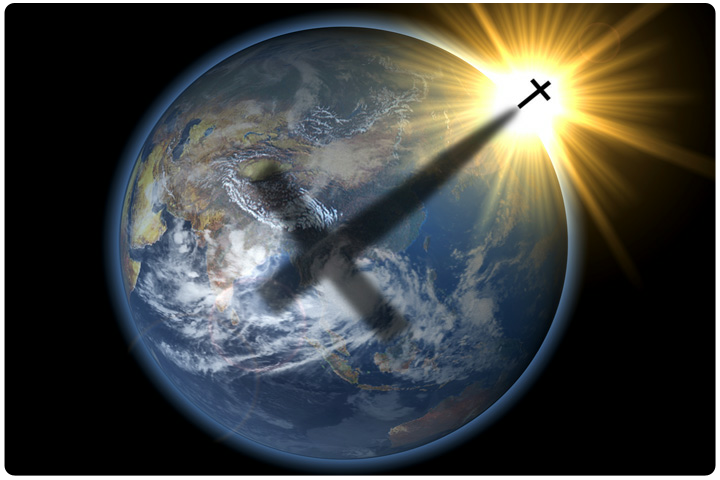
If we catch this, I think we can place many other things properly in our own world. We are less likely to fall into a spiritual / secular division. The word of work, for example, sits better with that larger frame. That’s a whole topic in itself, but rather than splitting things into spiritual and secular, we can see that many things matter, can be places of growth and training. Similarly we won’t pitch science versus faith – another big topic, but science is hinted at in the garden, naming the animals, working the ground.
So work and worship, family and love, wisdom and learning, discipline and training, outreach and growth, are all structured around this account of creation. It is all redeemed and renewed around sacrifice. And that heart of sacrifice is embedded in it all, is the key playing out part, for others. And that comes from the King’s heart of sacrifice.
All of that creation frame, ordered correctly, distributed through hearts that welcome him, becomes the kingdom. The kingdom comes in each of these realms; the kingdoms of the world become the kingdom of God; transformed through His people. 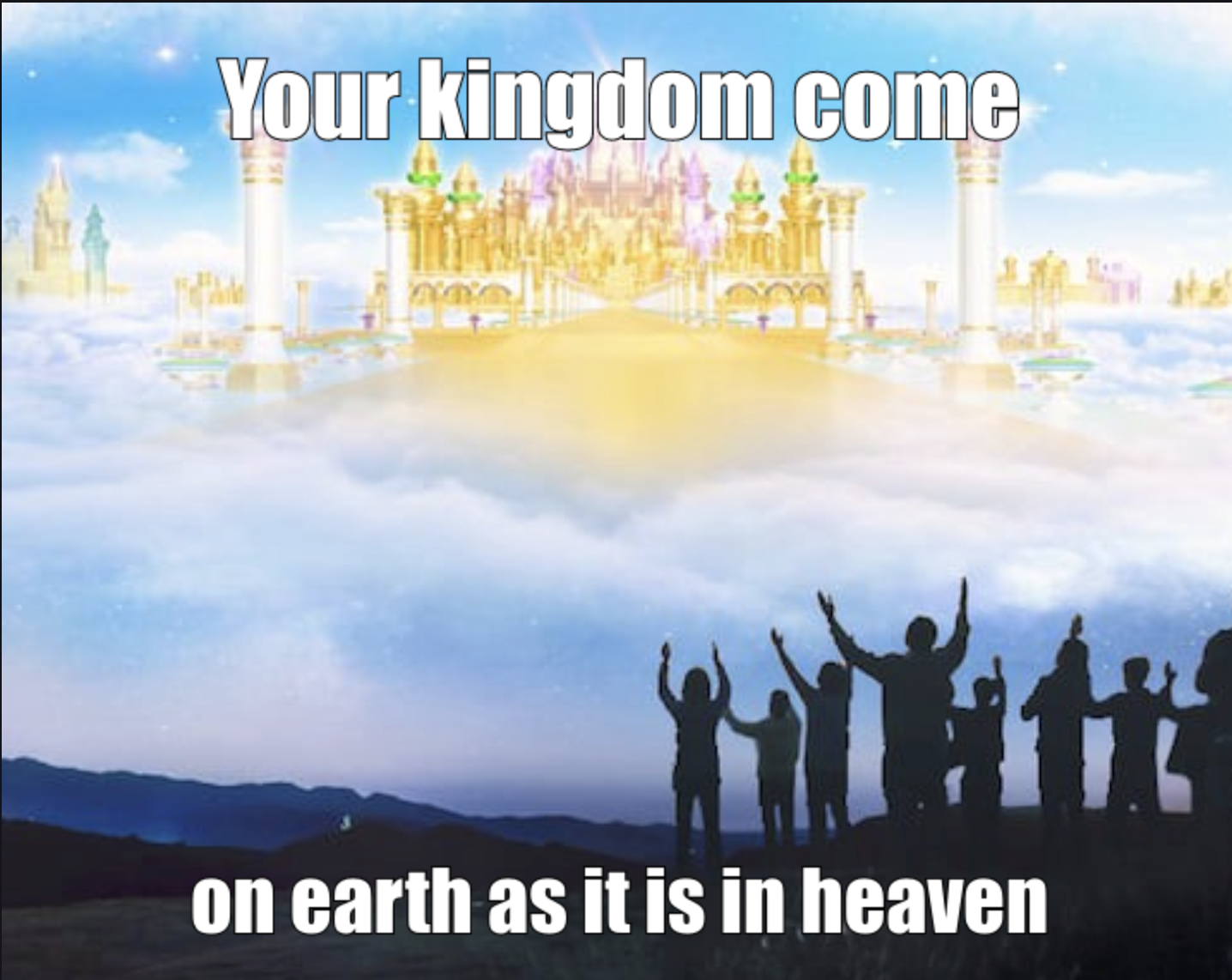
Next post (?) :
What does Paul mean when he says. “creation groans … waiting to come into the glorious liberty of the sons of God”. The frozen, bruised, winter of the land, the injury of the fall, groans as it waits for us to carry the love God forth.
How do we participate?
And maybe, shiver, time for some end times.
 Antioch Exchange